Fire Prevention Week 2026: Safe Charging Is a Superpower
Phones, laptops, e-bikes, scooters, power tools, even the kids' toys. Most of us charge a handful of lithium-ion batteries every day without a second thought. This Fire Prevention Week, October 4 to 10, we're asking you to give them that second thought.
This Year's Theme: Charge into Fire Safety
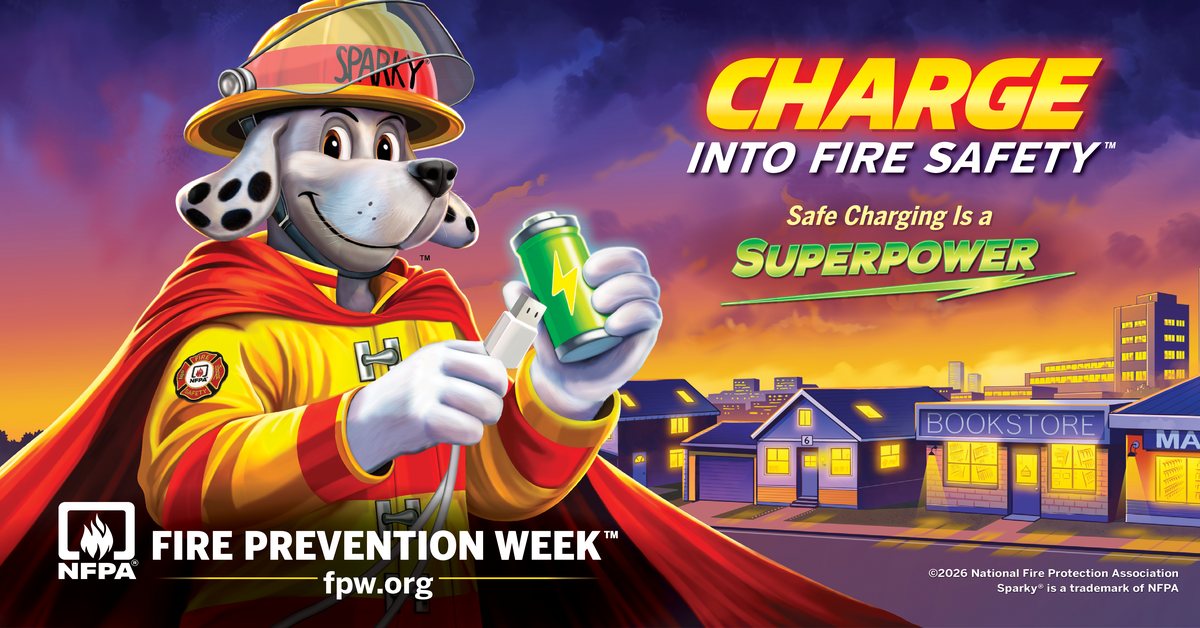
The National Fire Protection Association (NFPA) has sponsored Fire Prevention Week for more than a century. This year's theme is "Charge into Fire Safety: Safe Charging Is a Superpower." It's the second year in a row the campaign has focused on lithium-ion batteries, and for good reason. These batteries are now in almost every home, and when one fails, a fire can start suddenly and spread fast.
A battery that is damaged, overheated or poorly made can go into what firefighters call thermal runaway. The battery keeps heating itself, gives off flammable gases, and can burn intensely or even explode. These fires can also flare up again after they seem to be out.
Why This Matters to Us
The NSFBF was built by firefighters. We know that behind every fire call in this province is a crew of firefighters, most of them volunteers, who drop everything at a moment's notice. Every fire that never starts is a family that keeps its home, and a crew that doesn't have to put themselves in harm's way.
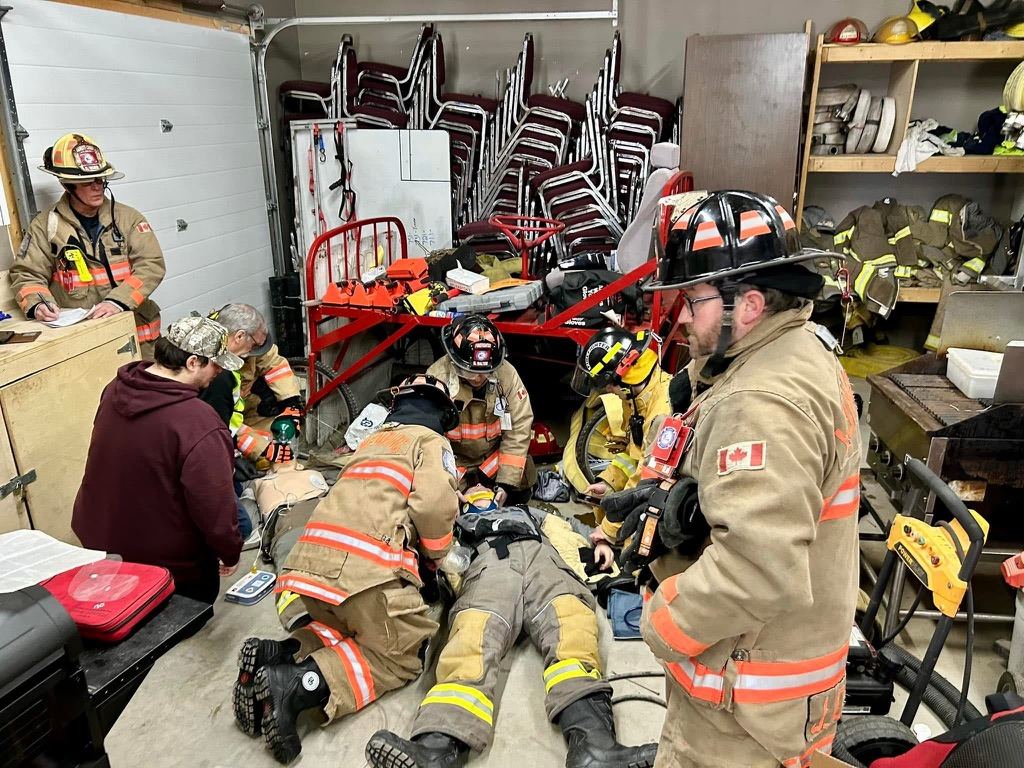
Prevention is the one part of firefighting that everyone can help with. A few simple habits at home make a real difference.
Six Safe-Charging Habits
- Buy certified products. Look for the mark of a recognized testing lab, such as CSA, UL or ETL. Be wary of unusually cheap batteries and chargers sold online.
- Use the right charger. Use the cord and charger that came with your device, or one the manufacturer approves. The wrong charger can damage the battery and raise the risk of fire.
- Charge on a hard, flat surface. A table or desk is ideal. Never charge on a bed, couch or under a pillow, where heat gets trapped.
- Unplug when it's full. Take devices off the charger once they're fully charged, rather than leaving them plugged in for hours.
- Charge big batteries outside or away from exits. E-bikes, e-scooters and power-tool batteries store far more energy than a phone. Charge them outdoors when you can, and never in a hallway or beside a door where a fire could block your way out.
- Know the warning signs. If a device or battery gets very hot, swells, smokes or gives off a strange smell, stop using it right away.
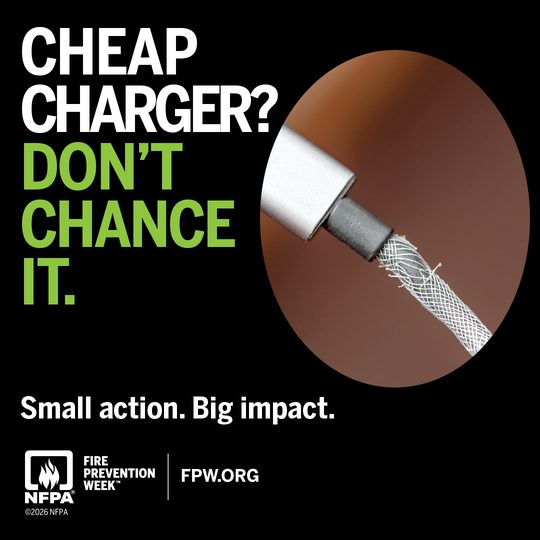
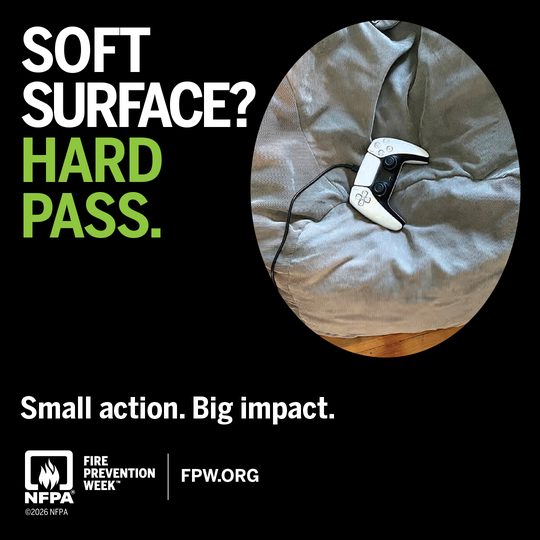
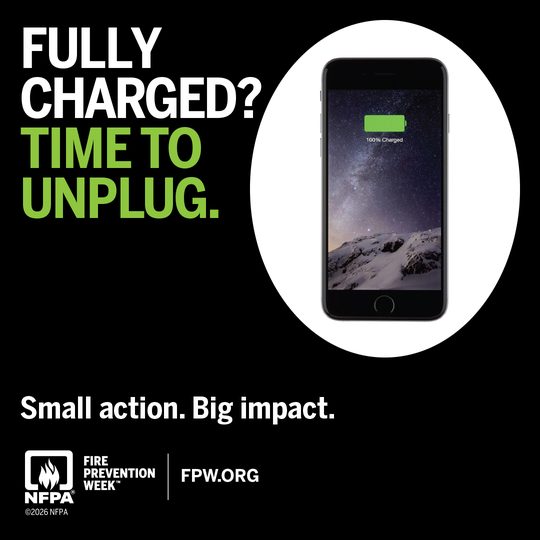
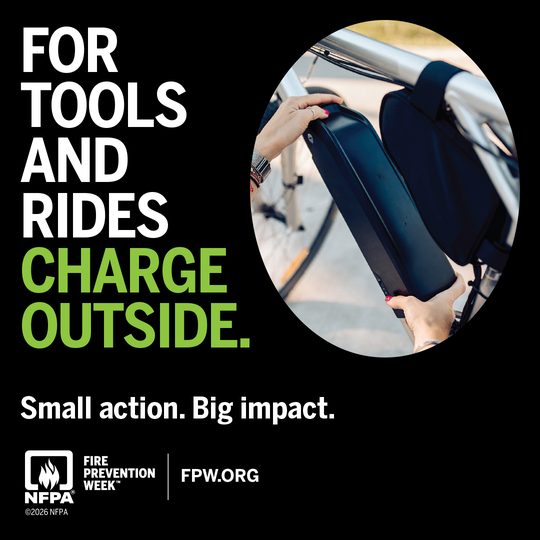
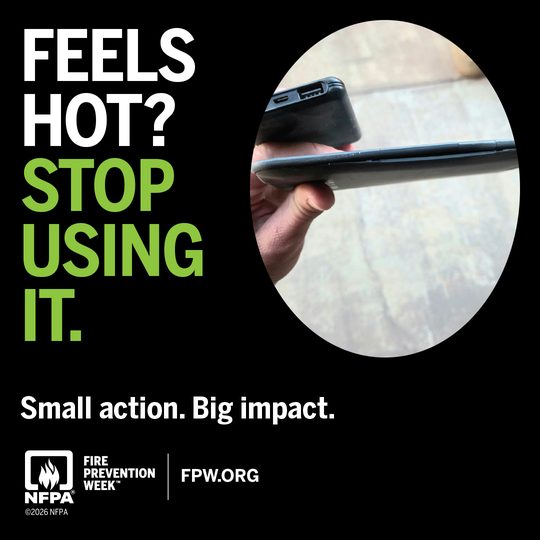
Official Fire Prevention Week social media cards. Share them with your family and friends. Reproduced from NFPA website fpw.org, © NFPA 2026.
If a battery is smoking or on fire
Get everyone out, close the door behind you, and call 911 from outside. Don't try to fight a battery fire yourself.
Recycle Old Batteries the Right Way
Never put lithium-ion batteries in your household garbage or blue bag. A battery that gets crushed in a garbage truck or sorting line can spark a fire.
Nova Scotia has a free province-wide battery recycling program run by Call2Recycle. It accepts single-use and rechargeable household batteries, along with e-bike and e-scooter batteries. Drop-off points include retailers and municipal depots across the province. You can find the nearest one at recycleyourbatteries.ca. Before you drop them off, tape over the battery ends or put each battery in its own clear plastic bag.
Don't Forget the Basics
- Smoke alarms: Make sure you have one on every level of your home and outside every sleeping area. Test them once a month.
- Carbon monoxide alarms: Install them if you have a fuel-burning appliance, a wood stove or an attached garage.
- An escape plan: Know two ways out of every room, pick a meeting spot outside, and practise it with everyone in your home.
Say Thanks to Your Local Fire Department
Many fire departments across Nova Scotia hold open houses and school visits during Fire Prevention Week. Check your local department's Facebook page, drop by, and meet the crew. A simple thank-you means more than you might think to the people who answer the call.
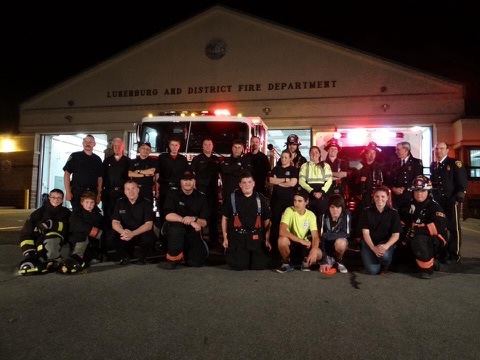
When Firefighters Need Help
Firefighters spend their lives looking after the rest of us. When an active Nova Scotia firefighter or their family faces a sudden crisis, such as an injury, a serious illness or the loss of their home, the NSFBF steps in. Our Immediate Need, Ongoing Need and Extraordinary Need programs provide fast, confidential support. We receive no government funding, and the fund is run entirely by volunteers.
Prevention Protects Your Family. Your Support Protects Theirs.
This Fire Prevention Week, help us stand behind the firefighters who stand between our communities and danger.
Make a DonationSafety tips adapted from the NFPA's Fire Prevention Week 2026 campaign. Fire Prevention Week artwork and cards: Reproduced from NFPA website fpw.org, © NFPA 2026. Battery recycling information from Call2Recycle Canada.